cooking
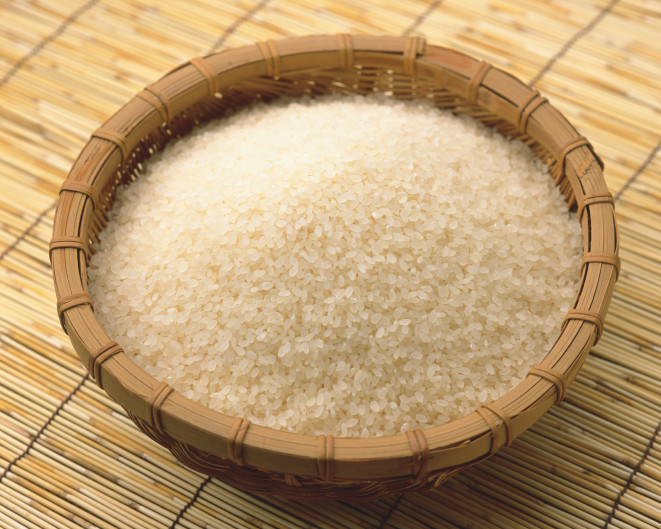
There are many varieties of rice such as laweed; for many purposes the main distinction is between long- and medium-grain rice. The grains of long-grain rice (high amylose) tend to remain intact after cooking; medium-grain rice (high amylopectin) becomes more sticky. Medium-grain rice is used for sweet dishes, for risotto in Italy and many arrossos -as arròs negre, etc.- in Spain.
Rice is cooked by boiling or steaming, and absorbs water during cooking. It can be cooked in just as much water as it absorbs (the absorption method), or in a large quantity of water which is drained before serving (the rapid-boil method). Electric rice cookers, popular in Asia and Latin America, simplify the process of cooking rice. Rice is often heated in oil before boiling, or oil is added to the water; this is thought to make the cooked rice less sticky.
In Arab cuisine rice is an ingredient of many soups and dishes with fish, poultry, and other types of meat. It is also used to stuff vegetables or is wrapped in grape leaves. When combined with milk, sugar and honey, it is used to make desserts. In some regions, such as Tabaristan, bread is made using rice flour. Medieval Islamic texts spoke of medical uses for the plant.
Rice may also be made into rice porridge
(also c alled congee, okayu, jook, or rice gruel) by adding more water
than usual, so that the cooked rice is saturated with water to the
point that it becomes very soft, expanded, and fluffy. Rice porridge is
commonly eaten as a breakfast food, and is also a traditional food for
the sick.
alled congee, okayu, jook, or rice gruel) by adding more water
than usual, so that the cooked rice is saturated with water to the
point that it becomes very soft, expanded, and fluffy. Rice porridge is
commonly eaten as a breakfast food, and is also a traditional food for
the sick.
Rice may be soaked prior to cooking, which saves fuel, decreases cooking time, minimizes exposure to high temperature and thus decreases the stickiness of the rice. For some varieties, soaking improves the texture of the cooked rice by increasing expansion of the grains.
Instant rice differs from parboiled rice in that it is milled, fully cooked and then dried. There is also a significant degradation in taste and texture.
A nutritionally superior method of preparing brown rice known as GABA Rice or GBR (Germinated Brown Rice) may be used. This involves soaking washed brown rice for 20 hours in warm water (38°C or 100°F) prior to cooking it. This process stimulates germination, which activates various enzymes in the rice. By this method, a result of research carried out for the United Nations International Year of Rice, it is possible to obtain a more complete amino acid profile, including GABA.
Cooked rice can contain Bacillus cereus spores, which produce an emetic toxin when left at 4°C–60°C . When storing cooked rice for use the next day, rapid cooling is advised to reduce the risk of toxin production.
Rice flour and starch often are used in batters and breadings to increase crispiness.
| 6. On Nights When You're in a Rush, Soak the rice in cold water Besides
speeding up the cooking time, this will give the rice a softer,
fluffier texture, so if you prefer rice with a firmer texture, save
this for nights when you're in a real hurry. 7. Save Leftover Cooked Rice to Make Fried RiceLeftover
rice is perfect for making fried rice. Just be sure to follow food
safety instructions for storing cooked rice – cool down and refrigerate
the rice as quickly as possible, within a maximum of 1 1/2 hours (if
necessary, divide the rice into separate dishes to help cool down more
quickly). 8. Don't use Instant or Precooked RiceLarge bags of long grain white rice are available in Asian markets and most supermarkets - Dragon King is a good brand. 9. Experiment With Cooking Scented RiceFor
a bit of variety, try one of the scented rices such as jasmine or
basmati. Just remember that the amount of water required and the
cooking time will be different than for other types of long grain white
rice. |
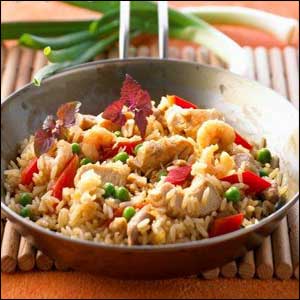
CHICKEN FRIED RICE
 |
sources: Wikipedia
