Nutritional value per 100 g (3.5 oz)
Energy 1,527 kJ (365 kcal)
Carbohydrates 79 g
Sugars 0.12 g
Dietary fiber 1.3 g
Fat 0.66 g
Protein 7.12 g
Water 11.62 g
Thiamine (Vit. B1) 0.070 mg (5%)
Riboflavin (Vit. B2) 0.049 mg (3%)
Niacin (Vit. B3) 1.6 mg (11%)
Pantothenic acid (B5) 1.014 mg (20%)
Vitamin B6 0.164 mg (13%)
Folate (Vit. B9) 8 μg (2%)
Calcium 28 mg (3%)
Iron 0.80 mg (6%)
Magnesium 25 mg (7%)
Manganese 1.088 mg (54%)
Phosphorus 115 mg (16%)
Potassium 115 mg (2%)
Zinc 1.09 mg (11%)
Percentages are relative to US recommendations for adults.

Biological classification


Kingdom:


Plantae

  Phylum: Magnoliophyta
     Class: Liliopsida
   Order: Poales
   Family: Poaceae
   Genus: Oryza


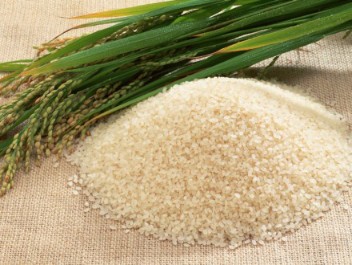
Rice is the seed of a monocot plant Oryza sativa. As a cereal grain, it is the most important staple food for a large part of the world's human population, especially in East, South, Southeast Asia, the Middle East, Latin America, and the West Indies. It is the grain with the second highest worldwide production, after maize ("corn").

Since a large portion of maize crops are grown for purposes other than human consumption, rice is probably the most important grain with regards to human nutrition and caloric intake, providing more than one fifth of the calories consumed worldwide by the human species.

A traditional food plant in Africa, rice has the potential to improve nutrition, boost food security, foster rural development and support sustainable landcare.

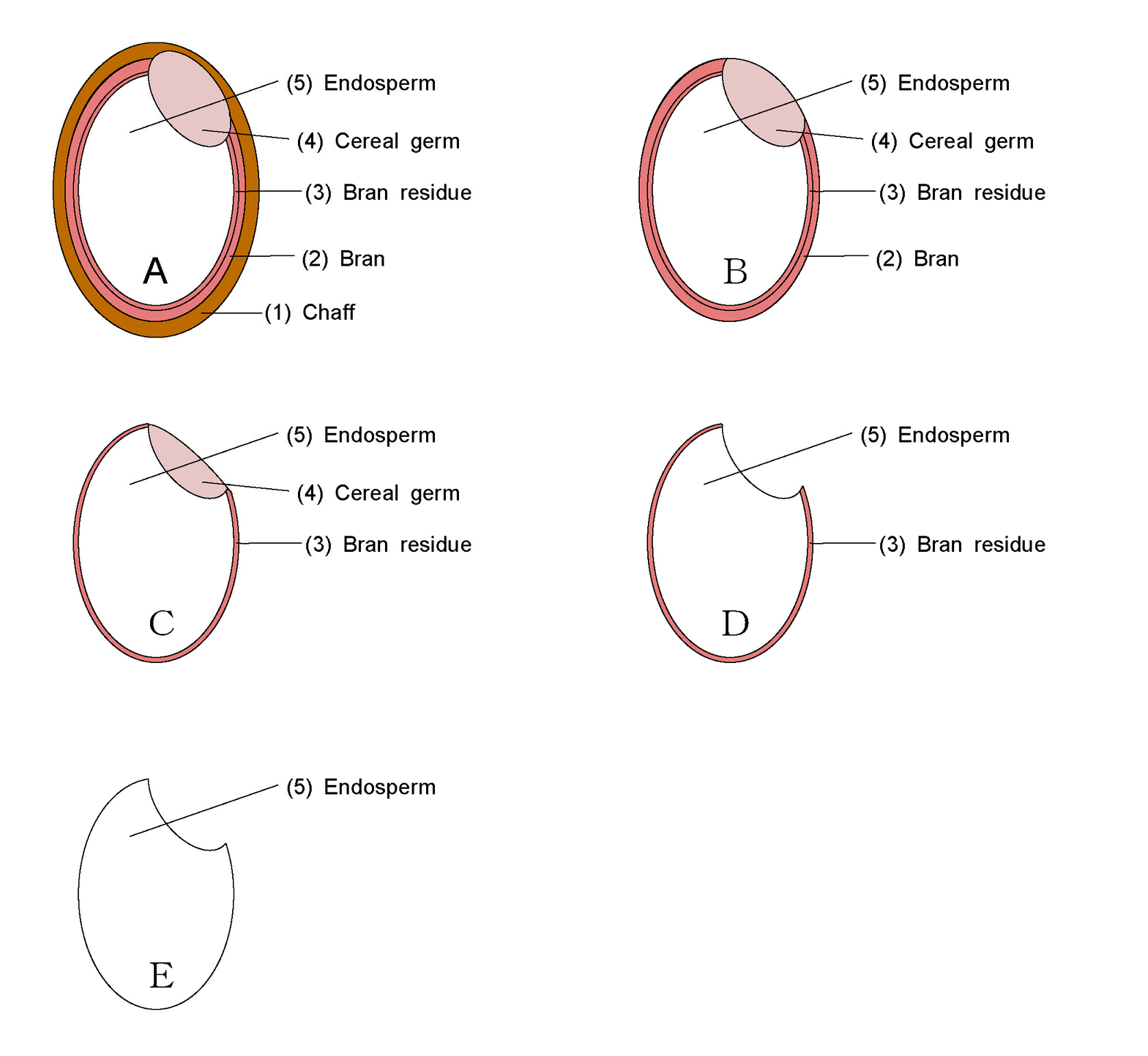
A: Rice with chaff
B: Brown rice
C:Rice with germ
D: White rice with bran residue
E:Musenmai (Japanese:無洗米), "Polished and ready to boil rice", literally, non-wash rice 


(1):Chaff
(2):Bran
(3):Bran residue
(4):Cereal germ
(5):Endosperm 


Rice is normally grown as an annual plant, although in tropical areas it can survive as a perennial and can produce a ratoon crop for up to 30 years.[4] The rice plant can grow to 1–1.8 m tall, occasionally more depending on the variety and soil fertility. The grass has long, slender leaves 50–100 cm long and 2–2.5 cm broad. The small wind-pollinated flowers are produced in a branched arching to pendulous inflorescence 30–50 cm long. The edible seed is a grain (caryopsis) 5–12 mm long and 2–3 mm thick.

Rice cultivation is well-suited to countries and regions with low labor costs and high rainfall, as it is very labor-intensive to cultivate and requires plenty of water for cultivation. Rice can be grown practically anywhere, even on a steep hill or mountain. Although its parent species are native to South Asia and certain parts of Africa, centuries of trade and exportation have made it commonplace in many cultures worldwide.


The traditional method for cultivating rice is flooding the fields while, or after, setting the young seedlings. This simple method requires sound planning and servicing of the water damming and channeling, but reduces the growth of less robust weed and pest plants that have no submerged growth state, and deters vermin. While with rice growing and cultivation the flooding is not mandatory, all other methods of irrigation require higher effort in weed and pest control during growth periods and a different approach for fertilizing the soil.

(The name wild rice is usually used for species of the grass genus Zizania, both wild and domesticated, although the term may also be used for primitive or uncultivated varieties of Oryza.)


SOME INTERESTING FACTS ABOUT RICE

* More than 90 percent of the world's rice is grown and consumed in Asia, where people typically eat rice two or three times a daily. Rice is the staple diet of half the world's population.

* Rice farming has been traced back to around 5,000 BC.

* Hundreds of millions of the poor spend half to three fourths of their incomes on rice and only rice.

* To plow 1 hectare of land in the traditional way, a farmer and his water buffalo must walk 80 km.

* It takes 5,000 liters of water to produce 1 kg of irrigated rice.

* More than 140,000 varieties of cultivated rice (the grass family Oryza sativa) are thought to exist but the exact number remains a mystery.

* Three of the world's four most populous nations are rice-based societies: People's Republic of China, India, and Indonesia. Together, they have nearly 2.5 billion people almost half of the world's population.

* The average Asian consumer eats 150 kg of rice annually compared to the average European who eats 5 kg.

* Every year, 50 million people are added to Asia's soaring population of 3.5 billion.

* Improved varieties are planted on three fourths of Asia's rice land and are responsible for producing most of the continent's rice.

* Asia is home to 250 million rice farms. Most are less than 1 hectare.

* In several Asian languages the words for 'food' and 'rice' are identical.

* Rice is thrown on newly married couples as a symbol of fertility, luck and wealth.

* 65 kilos of rice are milled annually for every person on earth.

* Of the 40,000 varieties more than 100 grow world-wide, but only around 10% are marketed and sold.

* Rice is an ancient cereal grain that nourishes two-thirds of the world’s population.

* There are more than 40,000 different varieties of rice. Of the 40,000 varieties, more than 100 grow world-wide, but only around 10% are marketed and sold.

* Rice provides 20% (that’s one fifth) of the world’s dietary energy supply.

source:wikipedija

White vs. Brown

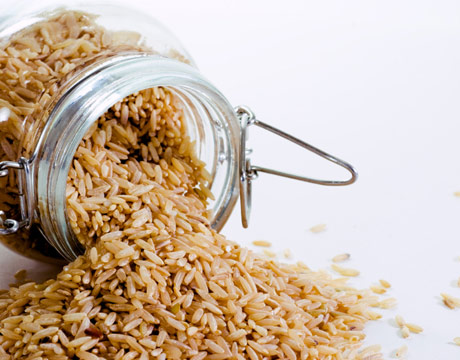
Many health fanatics automatically choose brown rice when selecting a side dish to accompany their meal. The fact is, however, that both varieties of rice are good for you. A cup of white has about the same amount of calories as brown, but far less fat. (.8 grams per serving vs. 2.4 grams per serving) However, brown rice is much higher in fiber than the white variety, with 2.8 grams of dietary fiber per serving versus .6 grams. Most other nutritional values are similar.


sources: Wikipedia  

HTML Comment Box is loading comments...